
Grocery
Apple Cider Vinegar
What it is
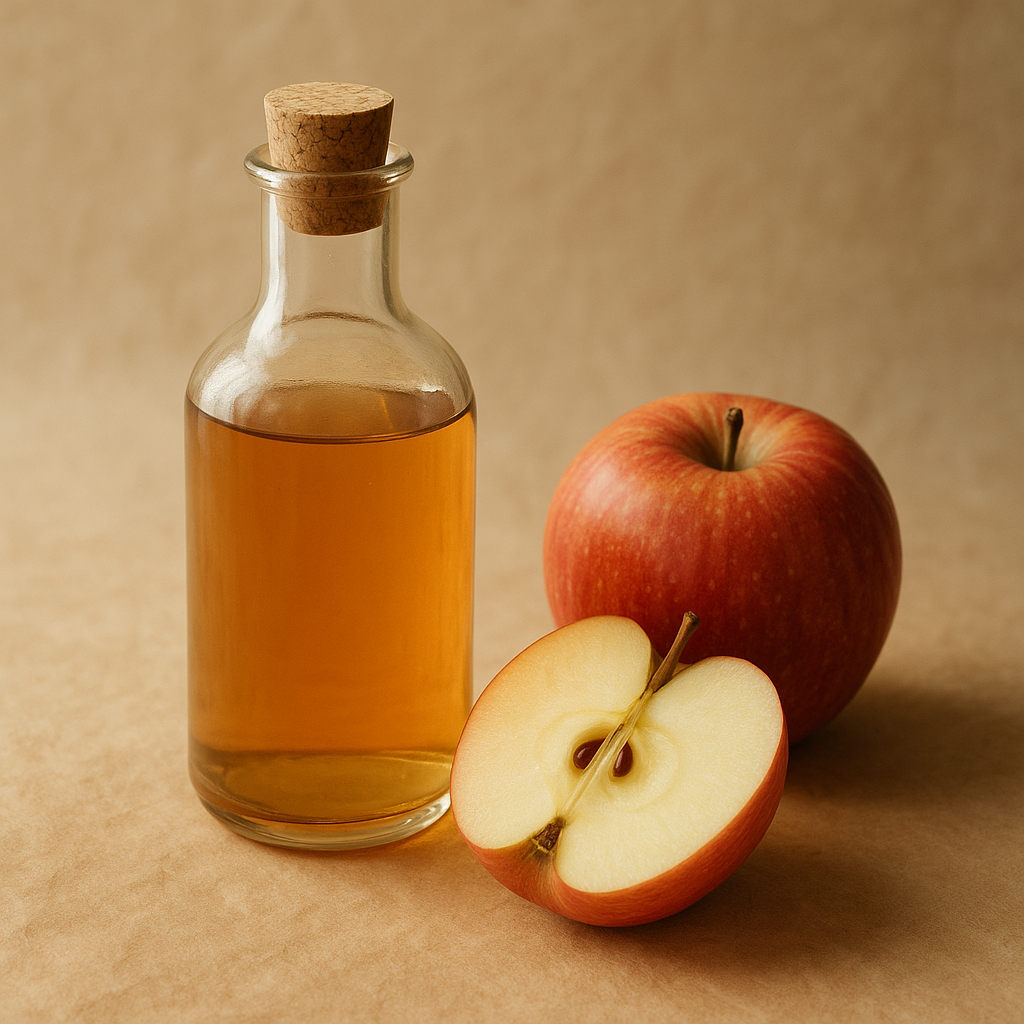
Apple cider vinegar is a type of vinegar made from fermented apple juice. The fermentation process converts the sugars in the apples into alcohol, and then into acetic acid. This gives apple cider vinegar its characteristic sour taste and pungent aroma. It is often sold unfiltered and unpasteurized, which means it may contain a cloudy substance called the 'mother,' composed of yeast and bacteria. This is considered by some to be a desirable quality.
How people cook with it
Apple cider vinegar is a versatile ingredient found in many kitchens. It can be used in both sweet and savory applications.
- Salad dressings
- Marinades
- Pickling brines
- Beverage mixers
People commonly use apple cider vinegar as a base for salad dressings, often whisked with oil, herbs, and seasonings. It is also a popular choice for marinades, adding a tenderizing quality and a bright flavor to meats and vegetables. Some individuals incorporate it into homemade pickles and chutneys, providing a tangy counterpoint to sweetness.
How it differs from similar foods
Unlike white distilled vinegar, which has a neutral flavor, apple cider vinegar offers a distinct fruity tang. Its acidity is generally less sharp than white vinegar, making it a gentler option for certain culinary uses. The presence of the 'mother' in some varieties also sets it apart from highly filtered vinegars.
Who it is for
Home cooks and culinary enthusiasts often keep apple cider vinegar on hand for its unique flavor profile and diverse applications.
How to keep the rest
To maintain its quality, store apple cider vinegar in a cool, dark place, such as a pantry. Once opened, it can be kept at room temperature. Refrigeration is not typically necessary but can help preserve its flavor for longer periods, especially if it contains the 'mother'.