
Grocery · 12 pcs
Large Organic Brown Eggs
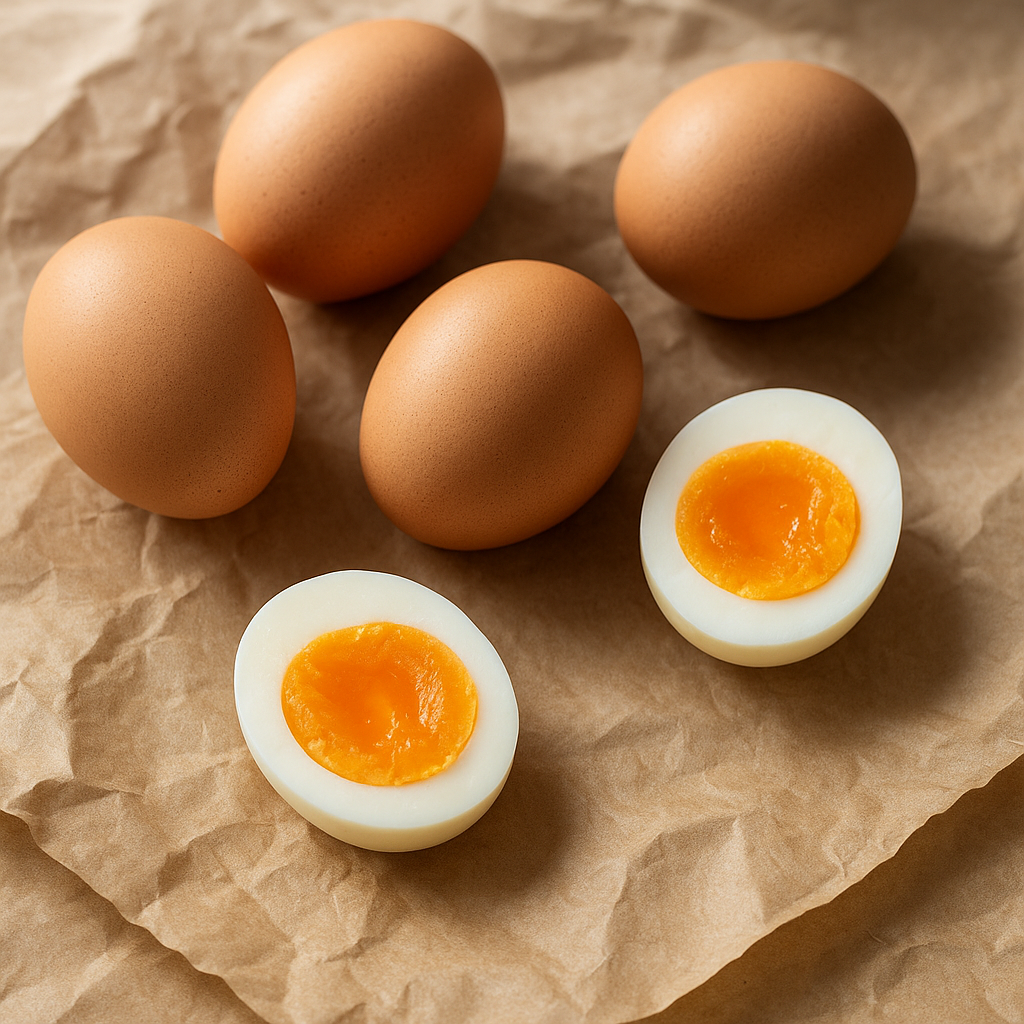
What it is
These are large, brown chicken eggs produced under organic farming standards. Organic eggs come from hens that are fed organic feed and are not given antibiotics or hormones. They are a staple ingredient in many kitchens, valued for their versatility and role in cooking and baking.
How people cook with it
Eggs are a fundamental ingredient used in countless culinary preparations, both sweet and savory. Their unique properties allow them to bind, leaven, emulsify, and add richness.
- Scrambled for breakfast
- Baked into cakes
- Fried for sandwiches
- Hard-boiled for snacks
Eggs can be cooked in numerous ways. For scrambling, whisk them with a splash of milk or water and cook gently in a lightly oiled pan until set. To bake, they are often beaten with sugar to create volume or incorporated into batters for structure. Frying involves cooking them in a hot pan until the whites are firm and the yolk reaches the desired consistency. Hard-boiling requires submerging eggs in water, bringing it to a boil, and then letting them sit for a set time before cooling.
How it differs from similar foods
Organic eggs differ from conventional eggs primarily in how the hens are raised and what they are fed. Organic hens must have access to the outdoors and eat certified organic feed, free from synthetic pesticides and fertilizers. Conventional hens may be kept in confinement and fed conventional feed.
Who it is for
Home cooks and professional chefs rely on eggs for a wide range of culinary applications.
How to keep the rest
To maintain freshness, store raw eggs in their original carton in the coldest part of your refrigerator, typically the main body of the fridge and not the door. Keep them away from strong odors. Properly stored, they can last for several weeks past their sell-by date.