
Grocery
Apple Cider Vinegar
What it is
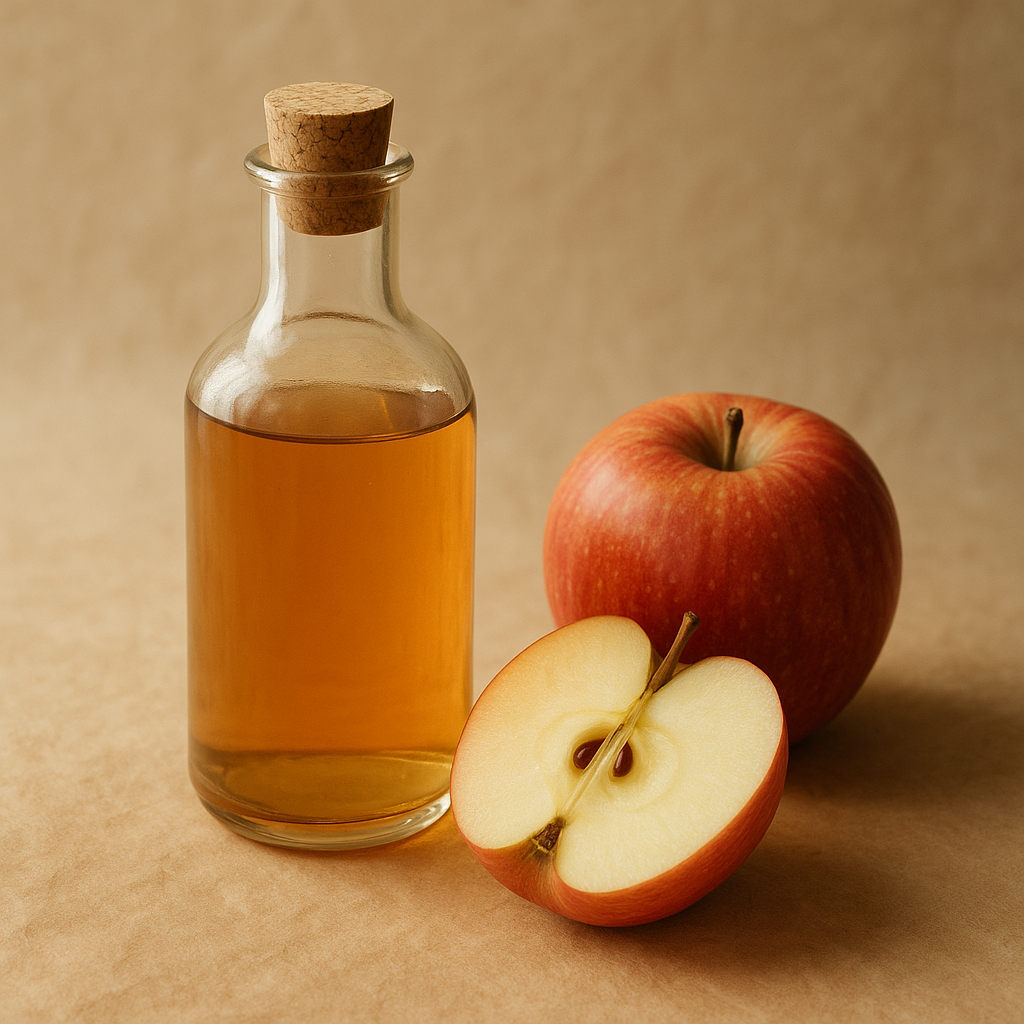
This is a fermented liquid made from crushed apples. It undergoes a two-step fermentation process. First, yeast converts the sugars in the apple juice into alcohol. Then, bacteria convert the alcohol into acetic acid, which gives vinegar its sour taste and pungent aroma. It is often sold unfiltered and unpasteurized, which means it may contain a cloudy substance called the 'mother.' This mother is a collection of bacteria and yeast strands.
How people cook with it
Apple cider vinegar is a versatile ingredient used in both cooking and for other household purposes.
- Salad dressings
- Marinades
- Pickling brine
- Cleaning solutions
In the kitchen, apple cider vinegar is a staple for creating tangy salad dressings and marinades that tenderize meats. It can be added to sauces and glazes for a touch of acidity. It is also commonly used in pickling vegetables, providing a sharp flavor and helping to preserve them. Beyond cooking, many people use it diluted with water as a natural cleaning agent for surfaces around the home, or in homemade beauty treatments.
How it differs from similar foods
Compared to white distilled vinegar, apple cider vinegar has a fruitier flavor profile and a less harsh acidity. Its fermentation from apples gives it a distinct aroma and a slightly sweeter undertone, making it a preferred choice for certain culinary applications where a milder tang is desired.
Who it is for
Home cooks and culinary enthusiasts often keep apple cider vinegar on hand for its distinct flavor and functional properties.
How to keep the rest
To maintain its quality, store apple cider vinegar in a cool, dark place, such as a pantry. Once opened, it can be refrigerated to extend its shelf life, although refrigeration is not strictly necessary for preservation due to its acidic nature. Ensure the cap is tightly sealed to prevent evaporation.