
Grocery
Almonds, Whole
What it is
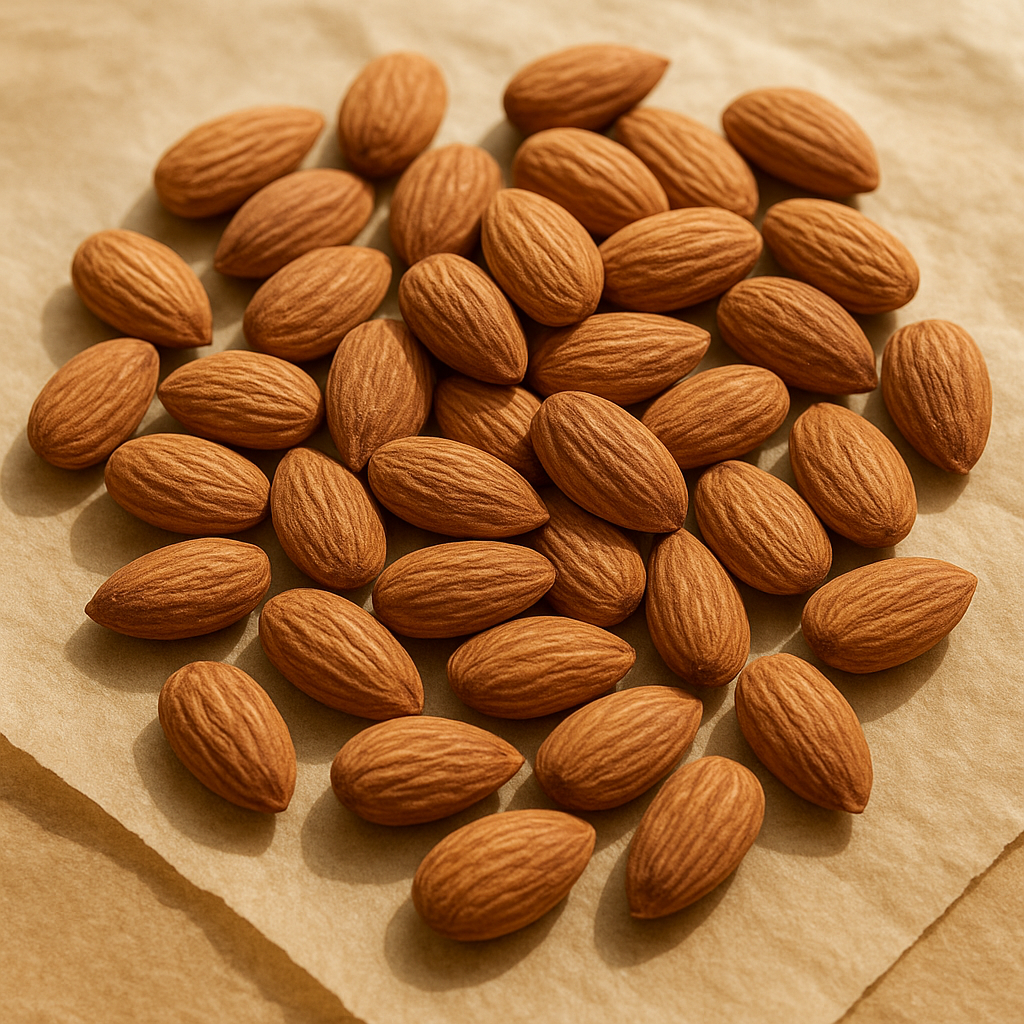
These are whole almonds, meaning they are presented in their natural, intact form without any processing like blanching or roasting. They retain their skins, which contribute a slightly different texture and flavor profile compared to blanched or slivered varieties. The almonds are typically dry and ready for use in various culinary applications.
How people cook with it
Whole almonds are a versatile ingredient that can be enjoyed in both sweet and savory dishes. Their natural form makes them suitable for snacking or as a decorative element.
- Snacking
- Baking inclusions
- Garnish
- Trail mix component
Whole almonds can be eaten as is for a satisfying snack. For baking, they can be added directly to cookies, cakes, and muffins, providing a delightful crunch. They are also excellent when toasted, which enhances their nutty flavor. Toasting can be done in a dry skillet over medium heat or in an oven. These almonds can also be roughly chopped or ground to be used as a topping for salads, yogurt, or as a component in homemade granola.
How it differs from similar foods
Unlike blanched almonds, these whole almonds still have their skins. This skin imparts a slightly more robust flavor and a subtle chewiness. They also differ from slivered or sliced almonds in that they are not cut, offering a different visual and textural experience in dishes.
Who it is for
Home cooks and bakers who appreciate natural ingredients and whole foods will find these almonds useful.
How to keep the rest
To maintain freshness, store any unused whole almonds in an airtight container in a cool, dry place. This helps prevent them from becoming stale or absorbing unwanted odors. For longer storage, they can be kept in the refrigerator.