
Grocery
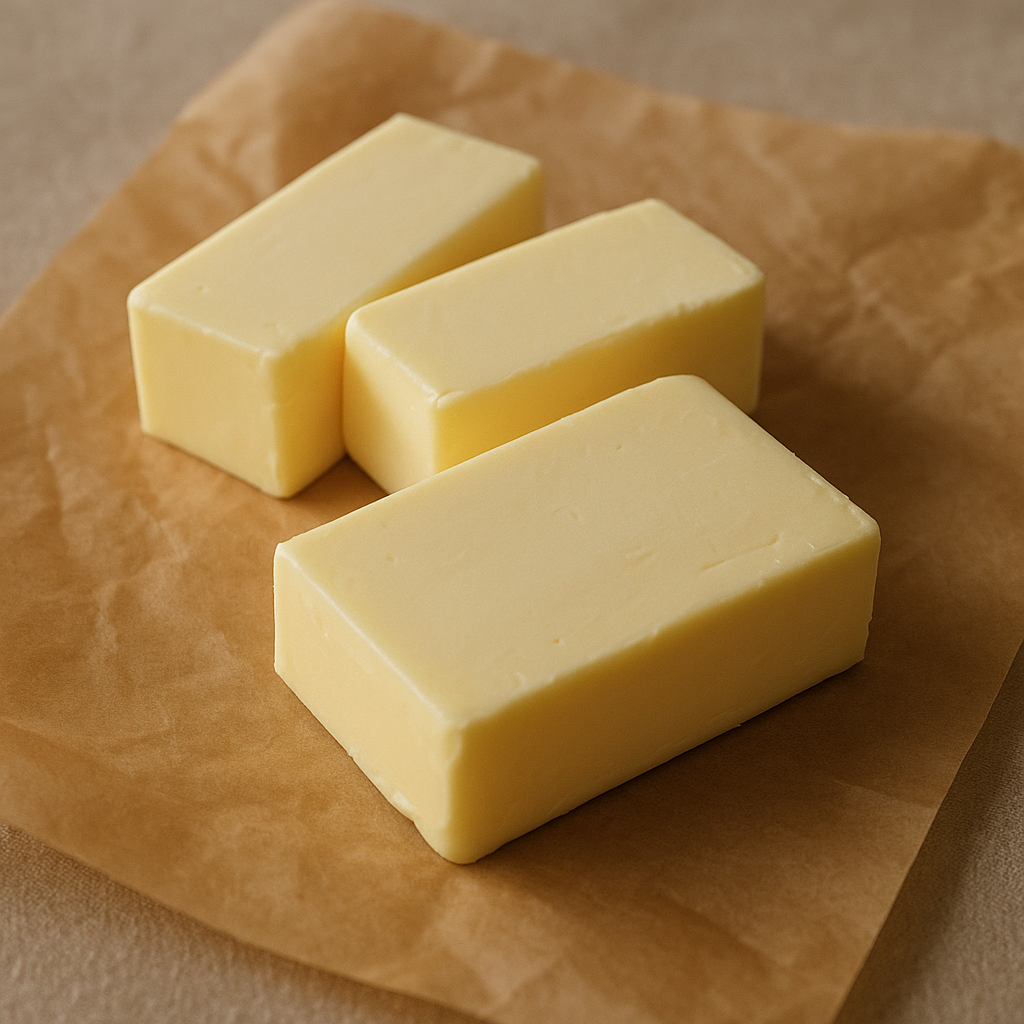
Unsalted Butter Sticks
What it is
This is a standard block of unsalted butter, a dairy product made from churning cream. It is a solid fat at room temperature but softens and melts when heated. Unsalted butter is preferred in many baking recipes because it allows the baker to control the overall salt content of the finished product. It has a rich, creamy flavor and a smooth texture.
How people cook with it
Butter is a fundamental ingredient in kitchens worldwide, used for both cooking and baking. Its versatility makes it indispensable for a wide range of culinary applications.
- Baking cakes and cookies
- Sautéing vegetables
- Spreading on toast
- Creating sauces
Unsalted butter can be used in its solid form for cutting into flour for pastries or pie crusts. It can be softened for creaming with sugar in cookies and cakes, or melted for use in batters, sauces, and for greasing pans. When sautéing, it adds flavor and helps to brown ingredients. It can also be whipped with herbs or spices to create compound butters for finishing dishes.
How it differs from similar foods
Unlike salted butter, this unsalted version contains no added salt. This distinction is important for bakers who need precise control over the saltiness of their creations. Salted butter can introduce an unpredictable amount of sodium, potentially altering the intended flavor profile of delicate baked goods.
Who it is for
Home cooks and professional bakers rely on unsalted butter for consistent results in their recipes.
How to keep the rest
To maintain freshness, keep any unused portions of this butter refrigerated. It can be stored in its original packaging or wrapped tightly in foil or plastic wrap. For longer storage, butter can be frozen, though its texture may change slightly upon thawing.