
Grocery
Unsalted Butter
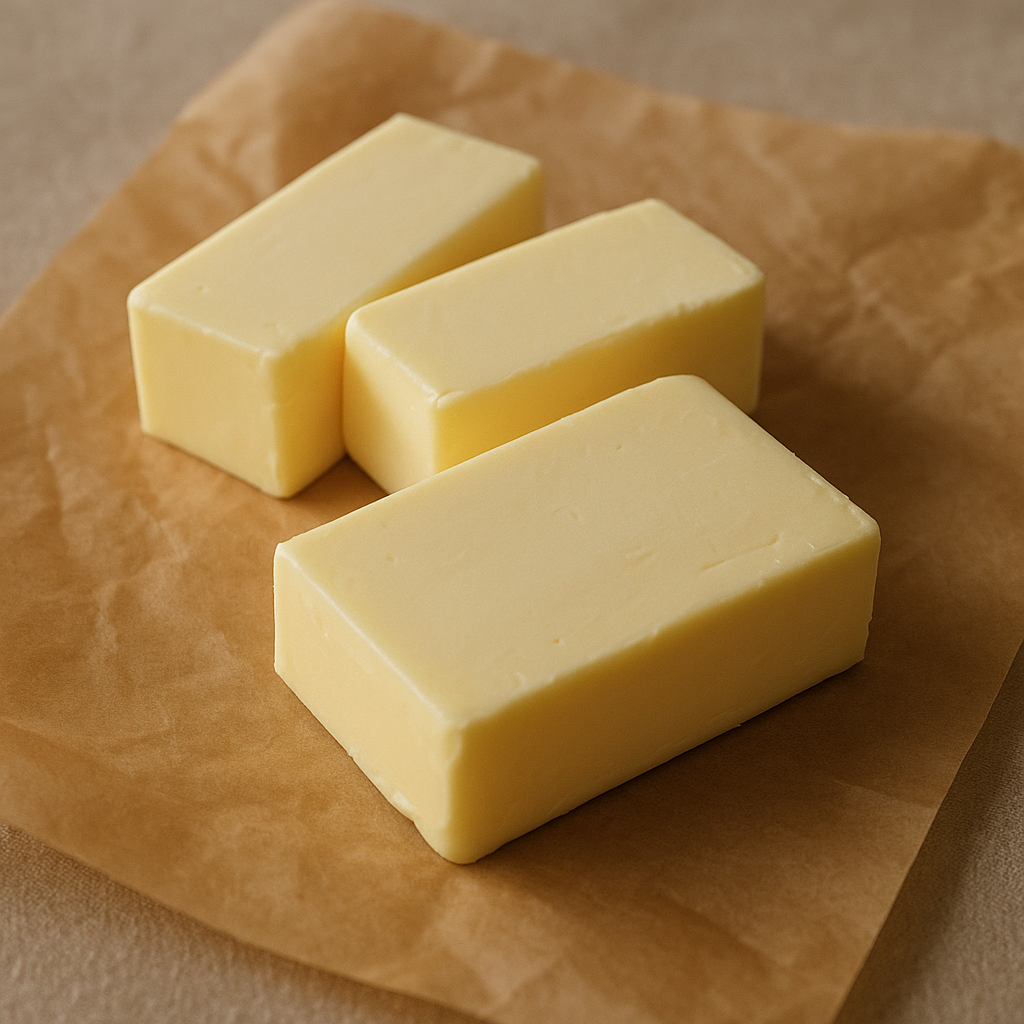
What it is
This is a dairy product made from churning cream. It is a solid fat at room temperature but softens and melts when heated. It has a rich, creamy flavor and a smooth texture. This particular butter is unsalted, meaning it does not contain added salt, which allows for greater control over the final saltiness of a dish.
How people cook with it
Butter is a fundamental ingredient in many kitchens, used for both cooking and baking. Its versatility makes it indispensable for a wide range of culinary applications.
- Baking cakes and cookies
- Sautéing vegetables
- Spreading on toast
- Making sauces
Unsalted butter can be melted to sauté ingredients, providing a rich base for dishes. It can also be creamed with sugar for baked goods, adding tenderness and flavor. When making sauces, it emulsifies liquids, creating a smooth and luxurious texture. For baking, its fat content contributes to the structure and moisture of pastries, cakes, and breads. Its unsalted nature is preferred by bakers who want to precisely manage the salt level in their recipes.
How it differs from similar foods
Unsalted butter differs from salted butter by the absence of added salt. This allows cooks and bakers to control the salt content of their dishes more accurately. Salted butter has a longer shelf life due to the preservative properties of salt.
Who it is for
Home cooks and professional chefs alike use unsalted butter for its predictable flavor and baking properties.
How to keep the rest
To store leftover unsalted butter, wrap it tightly in its original packaging or plastic wrap. Keep it refrigerated to maintain its firmness and prevent spoilage. For longer storage, it can be frozen.