
Grocery
Savory Bone Broth
What it is
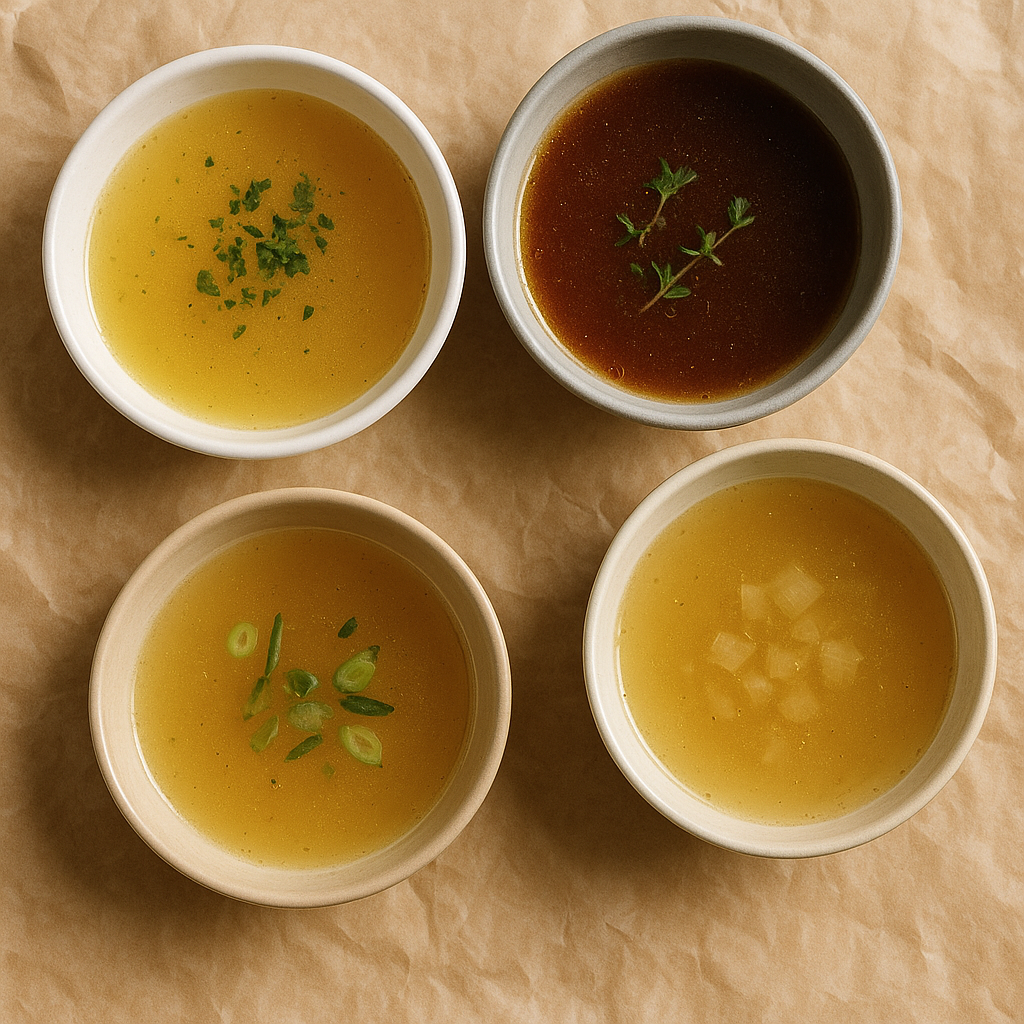
This is a rich, flavorful liquid made by simmering animal bones, often with vegetables and herbs. The long simmering process extracts collagen and other compounds from the bones, resulting in a deeply satisfying taste and a slightly gelatinous texture when chilled. It is a versatile base for many dishes, offering a foundational savory element that enhances their overall flavor profile. It is typically a clear or slightly cloudy liquid, depending on the ingredients and preparation.
How people cook with it
Bone broth is a fundamental ingredient in many cuisines, adding depth and richness to a wide array of preparations.
- Soup and stew base
- Sauce and gravy starter
- Braising liquid
- Flavor enhancer for grains
You can use bone broth as a direct substitute for water or other broths in recipes. It works wonderfully as a base for soups, stews, and chili, providing a more complex flavor than plain water. It can also be used to braise meats, adding moisture and flavor as they cook. When making sauces or gravies, it contributes a savory depth that is hard to replicate. Even cooking grains like rice or quinoa in bone broth instead of water can elevate their taste significantly. It is a simple way to add a layer of savory goodness to everyday meals.
How it differs from similar foods
Unlike vegetable broth, which relies on plant-based flavors, bone broth offers a distinct umami richness derived from animal bones. Its texture can also be slightly thicker due to the extracted collagen, giving it a more substantial mouthfeel compared to lighter broths.
Who it is for
Home cooks and professional chefs alike use bone broth to build flavor in their dishes.
How to keep the rest
Once opened, store any unused bone broth in an airtight container in the refrigerator. It should be consumed within a few days. For longer storage, you can freeze portions of the broth in ice cube trays or freezer-safe containers.